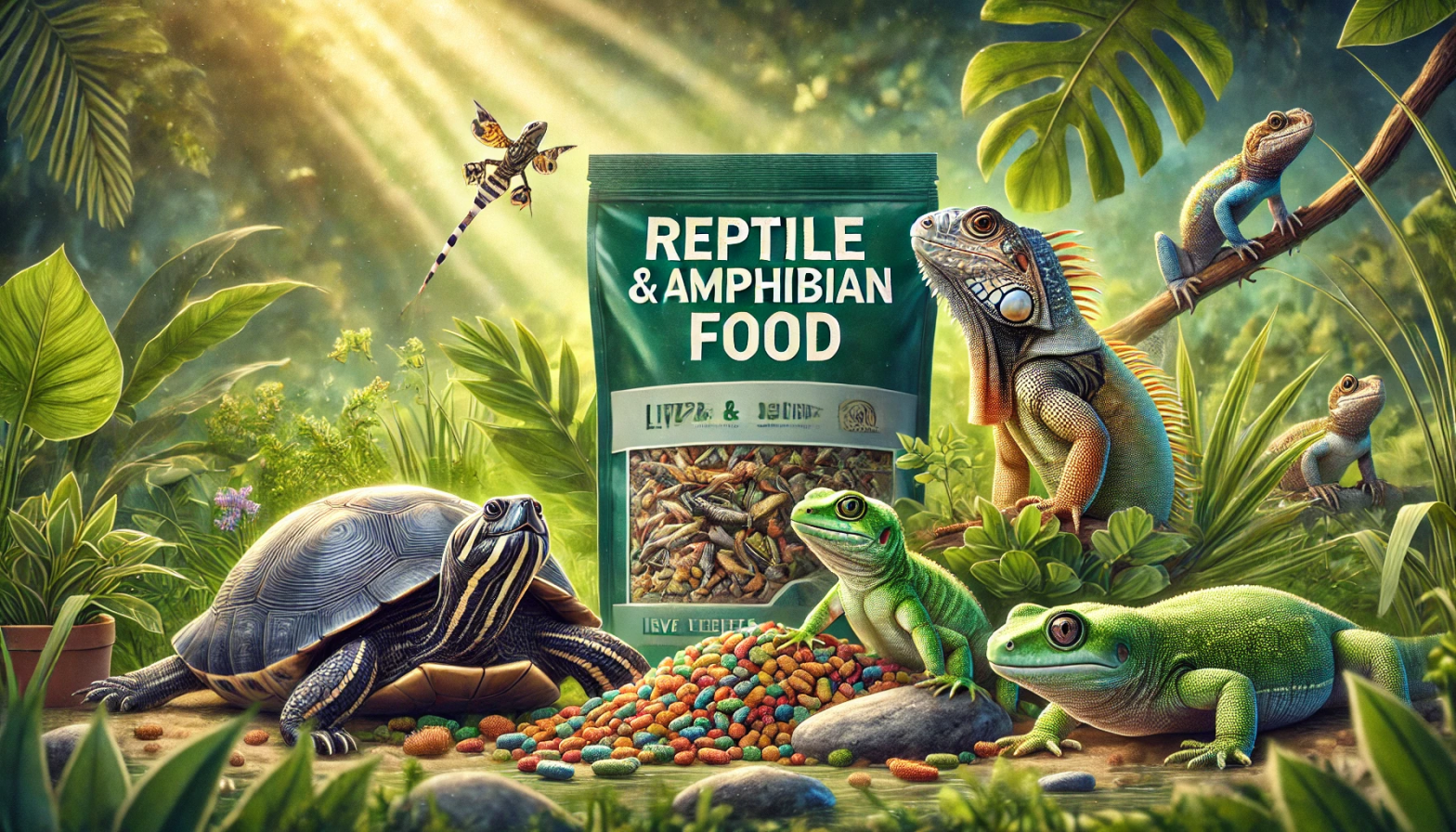
Proper nutrition is the foundation of a healthy life for any pet, and reptiles and amphibians are no exception. Whether you own a gecko, iguana, turtle, or frog, providing the right reptile and amphibian food ensures their growth, longevity, and vitality. In this guide, we’ll explore everything you need to know about feeding your scaly and slimy friends, from selecting high-quality food to purchasing reptile food online.

Understanding the Dietary Needs of Reptiles and Amphibians
Differences Between Reptile and Amphibian Diets
Reptiles and amphibians have vastly different dietary needs based on their species, age, and environment.
- Reptiles like turtles, lizards, and snakes may require live insects, leafy greens, or pre-packaged reptile food.
- Amphibians such as frogs and salamanders often rely on protein-rich diets, including live insects and worms.
Common Types of Reptile and Amphibian Food
- Live Prey: Crickets, mealworms, and dubia roaches.
- Pellets and Powdered Food: Convenient and nutritionally balanced.
- Fresh Vegetables and Fruits: Essential for herbivorous reptiles.
- Frozen or Freeze-Dried Food: Long-lasting and easy to store.
Providing the correct mix ensures your pet stays active and disease-free.
How to Choose Quality Reptile and Amphibian Food
Key Ingredients to Look For
When selecting reptile and amphibian food, always check for:
- High protein content for carnivorous species
- Fresh greens and natural ingredients for herbivores
- Added vitamins and minerals
Avoiding Harmful Additives and Fillers
Steer clear of products with:
- Artificial colors or preservatives
- Excessive filler ingredients like cornmeal
- Low nutritional value
A high-quality reptile food online store will often provide detailed ingredient lists and product descriptions.
Benefits of Buying Reptile Food Online
Convenience and Variety
Shopping for reptile food online eliminates the hassle of visiting multiple stores. Online platforms offer a broader selection, including specialized diets tailored to unique species.
Access to Premium Brands and Products
Online stores often carry premium, hard-to-find brands, ensuring your pets receive top-notch nutrition.
Subscription Services for Regular Deliveries
Many platforms offer auto-delivery services, so you’ll never run out of food.
Best Feeding Practices for Reptiles and Amphibians
Feeding Schedule and Portion Control
- Reptiles: Feed adult reptiles every 2-3 days and juveniles daily.
- Amphibians: Depending on their metabolism, they may require daily feeding.
Common Feeding Mistakes to Avoid
- Overfeeding or underfeeding
- Offering the wrong type of food
- Ignoring species-specific dietary needs
Top Trends in Reptile and Amphibian Nutrition
The pet food industry is constantly evolving, and reptile and amphibian food is no exception.
- Organic and Non-GMO Diets: Healthier alternatives for your pets.
- Supplementation with Calcium and Vitamins: Preventing deficiencies.
- Eco-Friendly Packaging: Reducing environmental impact.
Staying informed about these trends helps you provide the best care for your pets.
Conclusion: Ensuring a Healthy, Balanced Diet for Your Reptiles and Amphibians
Feeding your reptiles and amphibians is about more than just filling their bowls—it’s about understanding their unique dietary needs and sourcing the best reptile and amphibian food available. Whether you shop locally or buy reptile food online, prioritize quality, nutritional balance, and species-appropriate diets.
A well-fed pet is a happy, healthy companion, and your efforts will surely reflect in their active lifestyle and vibrant appearance.
FAQs
1. What is the best food for reptiles and amphibians?
The best food depends on the species, but a balanced diet of live prey, vegetables, and fortified pellets is often ideal.
2. Is buying reptile food online safe?
Yes, reputable online stores offer premium brands and ensure proper packaging and delivery.
3. How often should I feed my reptile or amphibian?
Feeding frequency varies by species, but most reptiles eat every 2-3 days, while amphibians often need daily feeding.
4. Are there vegetarian options for reptiles?
Yes, herbivorous reptiles like iguanas thrive on a diet of fresh greens and fruits.
5. How do I know if my reptile is underfed or overfed?
Signs like weight loss, sluggishness, or obesity indicate improper feeding. Consult a vet for guidance.
 Wiki Media Work