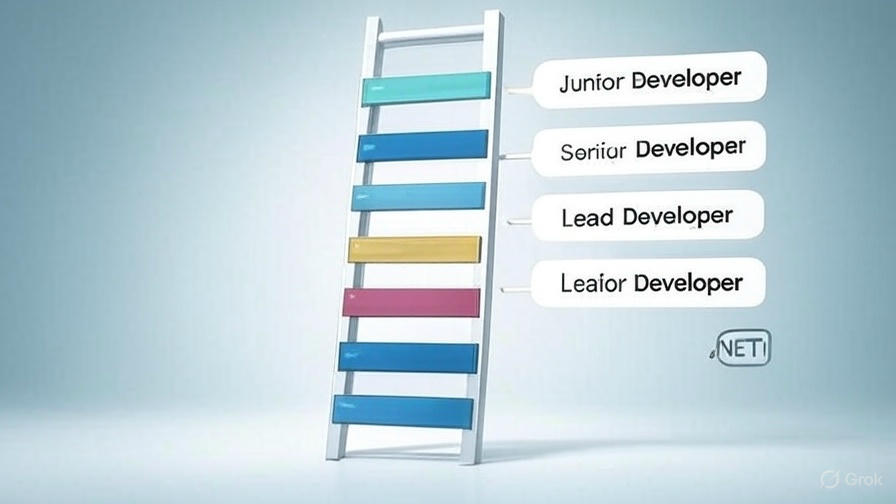
The technology landscape continues to evolve at breakneck speed, and Microsoft’s .NET framework remains one of the most sought-after platforms for enterprise development. For aspiring developers and those already working in the field, understanding the Junior to Senior: Career Ladder in .NET Development pathway is crucial for professional growth and success. This comprehensive guide will walk you through every stage of progression, from entry-level positions to senior leadership roles, providing insights into the skills, responsibilities, and strategies needed to advance your career.
Whether you’re just starting your programming journey or looking to climb higher on the professional ladder, navigating the .NET development career path requires strategic planning and continuous learning. The demand for skilled .NET developers continues to grow across industries, making it an excellent time to invest in your professional development. To accelerate your journey, consider enrolling in Best .net industrial training programs that provide hands-on experience with real-world projects.
Building a strong foundation is essential for career advancement. Many developers find it helpful to prepare thoroughly for technical interviews by studying comprehensive resources like .NET Interview Questions and answers to understand what employers expect at different levels.
Understanding the .NET Development Career Structure
The .NET development career path typically follows a structured progression that allows developers to advance based on their technical expertise, leadership abilities, and problem-solving skills. Understanding this structure helps you identify where you currently stand and what steps you need to take to reach your desired position.
Most organizations follow a hierarchical approach when it comes to developer roles, with each level requiring specific competencies and responsibilities. The progression usually starts with junior positions and moves through mid-level, senior, and eventually leadership roles. Each stage presents unique challenges and opportunities for growth.
Traditional Career Progression Levels
The standard progression in .NET development careers includes several distinct levels, each with its own set of expectations and requirements. Junior developers typically focus on learning fundamental concepts and completing assigned tasks under supervision. Mid-level developers take on more complex projects and begin mentoring newer team members.
Senior developers are expected to architect solutions, make critical technical decisions, and lead project initiatives. Beyond senior roles, developers can progress into technical leadership positions such as team leads, architects, or engineering managers, depending on their interests and career goals.
Junior .NET Developer: Building Your Foundation
Starting your career as a junior .NET developer is an exciting time filled with learning opportunities and challenges. At this level, your primary focus should be on mastering the fundamentals of the .NET framework, C# programming language, and basic software development principles.
Junior developers typically work on smaller features or bug fixes under the guidance of more experienced team members. This stage is crucial for building confidence and establishing good coding practices that will serve you throughout your career. The Junior to Senior: Career Ladder in .NET Development journey begins with solid foundational knowledge.
Essential Skills for Junior Developers
As a junior .NET developer, you should focus on developing proficiency in C# syntax, object-oriented programming concepts, and basic understanding of the .NET Framework or .NET Core. Familiarity with Visual Studio IDE, version control systems like Git, and fundamental database concepts using SQL Server are also essential.
Understanding web development concepts including HTML, CSS, and JavaScript will broaden your opportunities, especially if you’re interested in full-stack development. Learning about ASP.NET MVC or Web API basics will position you well for web application development roles.
Common Responsibilities and Expectations
Junior developers are typically responsible for implementing well-defined features, writing unit tests, participating in code reviews, and documenting their work. You’ll be expected to ask questions when unclear about requirements and actively seek feedback from senior team members.
Time management and the ability to estimate task completion times are important skills to develop early in your career. Junior developers should also focus on understanding the business context of their work, not just the technical implementation details.
Mid-Level .NET Developer: Expanding Your Expertise
The transition from junior to mid-level developer represents a significant milestone in the Junior to Senior: Career Ladder in .NET Development progression. At this stage, you’re expected to work more independently and take ownership of larger features or even entire modules within applications.
Mid-level developers typically have 2-4 years of experience and have demonstrated competency in core .NET technologies. They begin to specialize in specific areas such as web development, desktop applications, or cloud technologies, while maintaining a broad understanding of the overall development lifecycle.
Advanced Technical Skills
Mid-level developers should have strong knowledge of design patterns, SOLID principles, and software architecture concepts. Experience with popular .NET frameworks and libraries such as Entity Framework, AutoMapper, and dependency injection containers becomes increasingly important.
Cloud platform knowledge, particularly Microsoft Azure, is highly valued in today’s market. Understanding containerization with Docker, CI/CD pipelines, and modern development practices like Test-Driven Development (TDD) will set you apart from other candidates.
Leadership and Mentoring Responsibilities
As a mid-level developer, you’ll often be asked to mentor junior team members and participate in technical decision-making processes. This includes conducting code reviews, providing constructive feedback, and helping to establish coding standards and best practices within your team.
Project planning and estimation skills become more important at this level, as you’ll likely be involved in breaking down complex requirements and providing realistic timelines for deliverables.
Senior .NET Developer: Technical Leadership and Architecture
Reaching senior level in your Junior to Senior: Career Ladder in .NET Development journey represents mastery of technical skills combined with strong leadership abilities. Senior developers are expected to make architectural decisions, lead technical initiatives, and serve as subject matter experts within their organizations.
This level typically requires 5+ years of experience and demonstrated expertise in multiple .NET technologies and related platforms. Senior developers often specialize in specific domains while maintaining broad knowledge across the technology stack.
Architectural Responsibilities
Senior developers are responsible for designing scalable, maintainable solutions that meet both current and future business needs. This includes making technology stack decisions, defining system architecture, and ensuring that applications follow established patterns and practices.
Performance optimization, security considerations, and scalability planning become primary concerns at this level. Senior developers must balance technical excellence with business requirements and delivery timelines.
Team Leadership and Mentoring
Leading technical discussions, conducting architecture reviews, and mentoring both junior and mid-level developers are key responsibilities. Senior developers often serve as the technical voice in planning meetings and help translate business requirements into technical solutions.
Knowledge sharing through documentation, presentations, and training sessions becomes an important part of your role in fostering team growth and maintaining technical standards.
Specialized Career Paths in .NET Development
The Junior to Senior: Career Ladder in .NET Development offers various specialization opportunities that can enhance your career prospects and earning potential. Understanding these paths helps you make informed decisions about your professional development focus.
Different specializations require unique skill sets and offer distinct career advancement opportunities. Some developers prefer to remain hands-on with technology, while others gravitate toward management or consultancy roles.
Technical Architect Path
Solution architects and enterprise architects represent the pinnacle of technical expertise in .NET development. These roles require deep understanding of enterprise patterns, system integration, and the ability to design solutions that span multiple systems and platforms.
Architects must possess excellent communication skills to present technical concepts to non-technical stakeholders and influence decision-making at the organizational level.
Engineering Management Track
Some senior developers transition into management roles, becoming team leads, engineering managers, or technical directors. This path requires developing people management skills, budget responsibility, and strategic planning abilities.
Management roles often involve less hands-on coding but require strong technical background to make informed decisions and effectively lead technical teams.
Skills Development Strategies for Career Advancement
Advancing through the Junior to Senior: Career Ladder in .NET Development requires continuous learning and skill development. The technology landscape evolves rapidly, making it essential to stay current with new frameworks, tools, and best practices.
Successful developers create personal development plans that include both technical and soft skills improvement. This involves setting learning goals, seeking challenging projects, and actively participating in the developer community.
Technical Skill Enhancement
Stay current with the latest .NET releases and features, including .NET 6/7/8 improvements and new development paradigms. Experiment with emerging technologies like Blazor, .NET MAUI, and cloud-native development approaches.
Contributing to open-source projects, building personal projects, and obtaining relevant certifications can demonstrate your commitment to professional growth and technical excellence.
Soft Skills Development
Communication, problem-solving, and leadership skills become increasingly important as you advance in your career. Practice presenting technical concepts to different audiences and seek opportunities to lead initiatives within your current role.
Building relationships within the developer community through networking events, conferences, and online forums can provide valuable career opportunities and mentorship connections.
Salary Expectations and Market Trends
Understanding compensation trends is an important aspect of navigating the Junior to Senior: Career Ladder in .NET Development. Salaries vary significantly based on location, company size, industry, and specific skill sets.
Market demand for .NET developers remains strong, particularly for those with cloud experience and modern development practices. Staying informed about salary benchmarks helps you negotiate effectively and make strategic career decisions.
Factors Affecting Compensation
Geographic location plays a significant role in determining salary levels, with major tech hubs typically offering higher compensation packages. Company size, industry sector, and specific technology expertise also influence earning potential.
Specializations in high-demand areas such as cloud architecture, DevOps, or machine learning can command premium salaries and provide additional career security.
Negotiation Strategies
Research market rates for your level and location before salary negotiations. Document your achievements, contributions, and skill improvements to support your compensation requests.
Consider the total compensation package, including benefits, professional development opportunities, and work-life balance factors when evaluating job offers.
Industry Certifications and Professional Development
Professional certifications can accelerate your progress through the Junior to Senior: Career Ladder in .NET Development by validating your expertise and demonstrating commitment to continuous learning. Microsoft offers various certification paths relevant to .NET developers.
Certifications should complement practical experience rather than replace it. Choose certifications that align with your career goals and current market demands.
Microsoft Certification Paths
Microsoft Certified: Azure Developer Associate and Microsoft Certified: Azure Solutions Architect Expert are highly valued certifications for .NET developers working with cloud technologies. These demonstrate expertise in building and deploying applications on the Azure platform.
Other relevant certifications include Microsoft Certified: DevOps Engineer Expert and various role-based certifications that align with your specialization interests.
Alternative Learning Resources
Online learning platforms, bootcamps, and university programs offer flexible options for skill development. Many developers successfully combine formal education with self-directed learning to advance their careers.
Participating in hackathons, coding competitions, and community projects provides practical experience and networking opportunities that can accelerate career growth.
Building Your Professional Network
Networking plays a crucial role in career advancement throughout the Junior to Senior: Career Ladder in .NET Development journey. Building relationships with other professionals can lead to job opportunities, mentorship, and valuable industry insights.
Active participation in the developer community demonstrates your expertise and commitment to the field while providing opportunities to learn from experienced professionals.
Community Involvement
Attend local user groups, conferences, and meetups focused on .NET development and related technologies. Many cities have active .NET user groups that provide regular learning and networking opportunities.
Speaking at conferences or user groups, writing technical blog posts, and contributing to open-source projects can establish you as a thought leader in the community.
Online Professional Presence
Maintain an updated LinkedIn profile that highlights your technical skills and career progression. Engage with technical content and participate in professional discussions to increase your visibility.
Creating a portfolio website or GitHub profile showcasing your projects and contributions can help potential employers understand your capabilities and interests.
Remote Work and Modern Development Practices
The shift toward remote work has significantly impacted the Junior to Senior: Career Ladder in .NET Development landscape. Understanding how to succeed in distributed teams and remote work environments is increasingly important for career advancement.
Modern development practices emphasize collaboration, automation, and continuous delivery, requiring developers at all levels to adapt their working styles and technical approaches.
Remote Collaboration Skills
Effective communication in distributed teams requires different skills than traditional office environments. Written communication, asynchronous collaboration, and virtual presentation skills become essential for career success.
Familiarity with collaboration tools, project management platforms, and remote development environments can provide competitive advantages in the modern job market.
DevOps and Continuous Integration
Understanding CI/CD pipelines, automated testing, and deployment strategies is expected at all levels of .NET development. These skills are particularly important for senior developers who are responsible for establishing development processes.
Infrastructure as Code (IaC) and containerization technologies are becoming standard practices that can differentiate you from other candidates.
The Junior to Senior: Career Ladder in .NET Development path offers numerous opportunities for professional growth and career satisfaction. Success requires combining technical expertise with continuous learning, effective communication, and strategic career planning. By understanding the expectations at each level and focusing on both technical and soft skill development, you can navigate this progression successfully and build a rewarding career in .NET development.
Remember that career advancement is not just about reaching the next level, but about continuously growing your capabilities and contributing value to your organization and the broader developer community. The journey from junior to senior developer requires patience, persistence, and a commitment to lifelong learning, but the rewards in terms of career satisfaction and compensation make the effort worthwhile.
Frequently Asked Questions
How long does it take to progress from junior to senior level?
The progression timeline varies significantly based on individual dedication, learning ability, and opportunities. Typically, it takes 2-3 years to move from junior to mid-level, and another 2-4 years to reach senior level. However, some developers advance faster through intensive learning and taking on challenging projects.
What programming languages should I learn besides C#?
While C# is the primary language for .NET development, learning JavaScript, TypeScript, and SQL will expand your opportunities. Python or F# can be valuable for specialized applications, and understanding PowerShell helps with automation and DevOps tasks.
Is it necessary to learn cloud technologies for advancement?
Cloud knowledge, particularly Microsoft Azure, has become increasingly important for career advancement. Most modern applications are either cloud-native or hybrid, making cloud skills essential for senior positions and architectural roles.
How important are soft skills compared to technical skills?
Both are crucial, but their relative importance changes as you advance. Junior developers should focus primarily on technical skills, while senior developers need strong communication, leadership, and problem-solving abilities to be effective in their roles.
Should I specialize in a specific area or remain a generalist?
This depends on your career goals and market conditions. Specialization in high-demand areas like cloud architecture or DevOps can command higher salaries, while being a generalist provides more flexibility and broader opportunities.
What’s the best way to stay current with technology changes?
Follow Microsoft’s official documentation and announcements, participate in developer communities, attend conferences, and regularly work on personal projects using new technologies. Setting aside dedicated time each week for learning is essential.
How do I transition from developer to management roles?
Start by taking on mentoring responsibilities, leading small projects, and developing people management skills. Consider pursuing leadership training or an MBA if you’re serious about management. Remember that management roles require different skills than individual contributor positions.
Are certifications worth the investment?
Certifications can be valuable for demonstrating expertise and opening doors, especially early in your career. However, they should complement practical experience rather than replace it. Focus on certifications that align with your career goals and current market demands.
How do I negotiate salary increases effectively?
Research market rates for your role and location, document your achievements and contributions, and prepare a clear case for why you deserve the increase. Consider the total compensation package, not just base salary, and be prepared to discuss your future value to the organization.
What’s the difference between a senior developer and a lead developer?
Senior developers are individual contributors with advanced technical skills and some mentoring responsibilities. Lead developers typically have formal leadership responsibilities, including project management, team coordination, and strategic technical decision-making authority.
 Wiki Media Work